


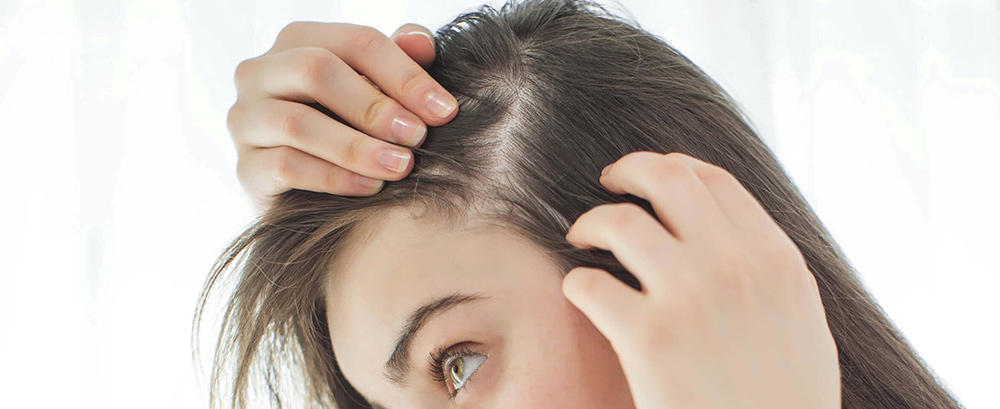
Female Hair Loss
Healthy, strong hair is a significant part of the ideal of a woman’s beauty and the attractiveness. Symbolizing strength and vitality, hair affects self-confidence.
What Causes Female Hair Loss?
The problem of hair loss is very popular among men, but it is also common among women. Statistics show that one in five people has a problem with hair loss. Although the forms of alopecia (hair loss) are very similar in women and men, the causes of hair loss can be very different.
To determine the cause of a woman’s hair loss, a doctor must put in a lot more effort than if the patient had a male problem. The thyroid gland needs to be checked for normal function, and an iron deficiency test should be performed to assess the amount of iron in the body.
An important part of women’s hair loss problems is genetic type hair loss.
20% of women with hair loss have family history. We can list the factors that cause hair loss in women other than genetic causes as follows:
- Hormone Imbalances
An important cause of hair loss and hair weakening seen in women is hormone imbalances and hormone treatments. It is observed that the used birth control pills often cause hair loss.
- Post-Natal Period
Experts indicating that a large part of the hair is growing in pregnant women, state that the hair has passed to the resting phase of the hair growth cycle during the post-natal period, they are lost in excessive amounts within 2-3 months, this period could continue until 1-6 months and mostly they grow up again and reach up to their previous amounts.
- Fever And Heavy Infections
Experts indicating that diseases can cause hair to enter the resting phase, state that 4 weeks to 3 months after a high fever and a severe illness, intense hair loss may occur, but over time the hair will become its previous condition.
- Thyroid Disease
Hair loss is also seen during the treatment of hormone deficiency, which is caused by excessive or short work of the thyroid gland, which is called hyperthyroidism and hypothyroidism in the medical literature.
- Iron Deficiency
Iron deficiency anemia can result from heavy menstrual bleeding or not consuming enough foods which are rich in iron, and this can lead to hair loss.
- Malnutrition And Stress
As a result of the senseless diets and unidirectional diets, the hair does not have enough protein within the structure of the keratin in its structure, vitamins, minerals which are essential for life cycle. As a result, the problem of hair loss and weakness occurs. Moreover, anything that is a source of stress for the body will also show its negative effect on the hair.
- Treatments of Some Diseases
Experts indicating that some cancer treatments can stop hair cells from dividing, but also added that they can lose 90% of their hair, but after the end of therapy, their hair will grow again and return to their previous state. For this reason, it is recommended that those who have cancer treatment do not feel stressed due to hair loss and wait for the necessary time to pass.
- Some Surgical Operations and Chronic Diseases
Excessive hair loss can be seen within 1-3 months in patients undergoing major surgery. This can pass within a few months. However, in people with severe chronic illness hair loss can occur as a lifelong process.
- Trichotillomania
Children and sometimes adults can draw their hair, eyebrows, or eyelashes till pulling them and make it a habit. Experts recommend psychological assistance in such situations.
- Alopesi Areata
In this type of hair loss, areas with smooth surface, money size or larger round patches form out. Rarely the loss can occur in all the hair and body hairs. Although it is not known why these types of hair loss that can be seen in every age is known, hair grows spontaneously later on in many patients.
- Mistakes Of Hair Care
According to experts, methods such as dying, coloring, smoothing or perming can damage the hair unless they are done under suitable conditions. Applying these methods often or at the same time can cause the hair to weaken and break. Hair forms such as ponytails, knitting, gathering with tight tires which pull the hair, should not be applied too often. Because the constant pulling force acting on the hair’s base causes hair loss. Frequent washing, combing, and brushing can break your hair.
Hair loss can be accompanied by complaints of irregular periods, the appearance of hair in areas where it is common in men, severe liver failure, or abrupt withdrawal of hair from the temples. Usually, these symptoms may indicate a deficiency of male hormones. Then a normal blood test will be useful to make a diagnosis. An appropriately trained physician, such as a family doctor, gynecologist, or endocrinologist, will prescribe treatment for women with hormonal imbalances.
Treatment
According to the level of female hair loss, there are various options for treatment.
- Make sure you have enough protein, B6 and zinc.
- Your doctor may prescribe some specific medications.
- Hormone replacement therapy or estrogen-predominant oral contraceptives may be prescribed.
- Hair transplantation or plastic surgery can be evaluated. As the hair follicles grow in the scar tissue, it is possible to grow the hair both in the scalp and around the temples. If necessary, the hair can be made thicker along the forehead line or lowered, or the eyebrows can be transplanted.
Hair transplantation operations, performed by an experienced team under the leadership of Plastic, Reconstructive and Aesthetic Surgeon Caghan BAYTEKIN, MD Pras, are performed in our equipped clinic without shaving the hair completely, with the sufficient number of grafts and the most accurate method.
Get ready for a hair recovery journey where you will feel very comfortable under our guidance at every stage, from transportation to transfer, from accommodation to the entire medical process.